
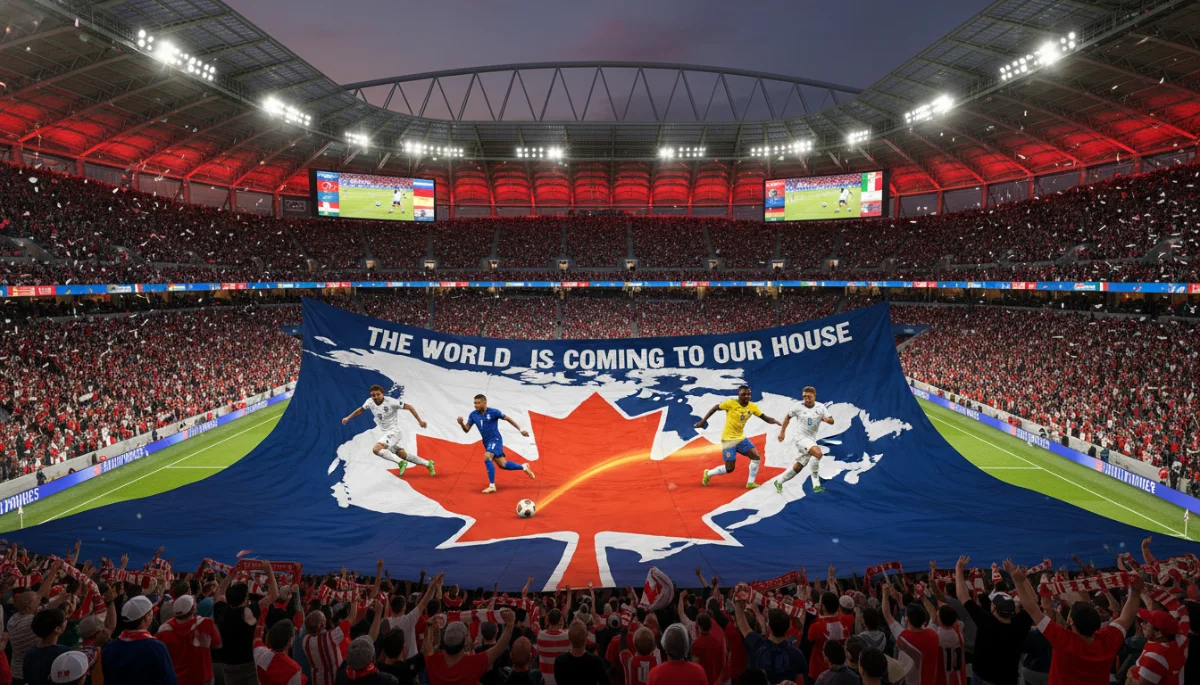
The 2026 FIFA World Cup will arrive with unusual scale, rare geography, and enormous pressure on every favorite. With Canada, Mexico, and the United States sharing hosting duties, the tournament will unfold across familiar cities and hostile road trips, where travel, weather, and momentum may matter as much as talent.
For Canadian supporters, the emotional split is obvious: cheer hard for the home side, then keep one eye on the global heavyweights that are most likely to shape the bracket. The expanded 48-team field should create more surprises than any recent edition, but the same names still sit at the top for a reason.
What follows is a revised ranking of the leading contenders, built around squad quality, tournament experience, and the kind of balance that usually decides a month-long competition.
France Still Sets the Standard
France remains the benchmark because it can win in multiple ways. The squad is stacked from back to front, and Kylian Mbappé gives it a decisive edge that few opponents can match. When he is running at full speed, defenders are forced into damage control before the rest of the attack has even joined the play.
What separates France from most rivals is not only the star power, but the depth behind it. Midfield control, defensive strength, and a long record of surviving knockout pressure make the team look almost engineered for major tournaments. If the travel and scheduling of a North American World Cup do not unsettle them, France may arrive as the team everyone else is chasing.
Brazil and England in the Same Chase
Brazil has waited far too long by its own standards, and that frustration has only sharpened the urgency around the Seleção. The attack is still built to create moments that feel improvised but ruthless, with Vinícius Júnior and Rodrygo capable of turning a flat match into a burst of chaos. Just as important, Brazil has tried to pair that attacking freedom with a more disciplined structure, which is exactly what tournament football demands.
England, meanwhile, carries a different kind of burden. The talent is obvious, and the spine of the team looks strong enough to control nearly any opponent. Jude Bellingham brings presence and creativity in midfield, while Harry Kane remains one of the most reliable finishers in international soccer. The question is not whether England can compete; it is whether the weight of expectation will finally stop looking like a second opponent.
Both teams belong near the top because they can survive different kinds of games. Brazil can win by flair, and England can win by control. Each has the quality to reach the final weekend if the draw breaks correctly and the timing of their best performances lines up.
Argentina, Spain, and Germany Stay Dangerous
Argentina enters 2026 as the defending champion, which guarantees attention whether or not the squad looks exactly the same as before. Lionel Messi may no longer carry the full tactical load, but his presence still matters in moments that require calm and authority. Around him, players such as Julián Álvarez and Alexis Mac Allister give Argentina the mix of movement, intelligence, and competitive bite that has long made the team so difficult to eliminate.
Spain has also refreshed its identity. The side is still defined by technical quality, but it now looks more willing to attack space directly and trust young difference-makers in wide areas. Lamine Yamal represents the kind of fearless talent that can tilt matches at a World Cup, especially when opponents are forced to defend deep and react quickly.
Germany deserves respect again after recent disappointments. The national team has spent enough time searching for stability, and its best path forward still comes from organization, structure, and collective control. When Germany is functioning properly, it can squeeze the life out of an opponent and turn a tight match into a tactical exercise. That profile is hard to dismiss in a competition where patience often matters more than style.
Portugal, Italy, the Netherlands, and Uruguay Fill Out the Threat List
Portugal is more balanced than it used to be, and that makes it dangerous. The attack no longer depends on a single dominant figure, because players like Rafael Leão, Bruno Fernandes, and Bernardo Silva can all shape a match in different ways. The squad has enough creativity to break open compact defenses and enough experience to handle the knockout phase without panicking.
Italy remains the classic tournament problem. Even when it does not look flashy, it usually looks organized, stubborn, and hard to remove from a game plan. The Azzurri have rebuilt around defensive discipline and relentless work in midfield, which means few teams will enjoy facing them if the margin stays thin late in matches.
The Netherlands keeps attracting the same label, because the talent is real and the results often lag behind it. A back line anchored by Virgil van Dijk gives the team a strong foundation, and the group has the athleticism to survive a demanding knockout run. If the attack becomes efficient at the right time, the Dutch can absolutely turn a quarterfinal appearance into something bigger.
Uruguay rounds out the group because of intensity. Marcelo Bielsa’s version of the team is built on pressure, movement, and the refusal to give opponents a comfortable second on the ball. Darwin Núñez supplies the physical edge and direct threat that make Uruguay unpleasant to face, especially in a match that becomes stretched and emotional.
What Canada Can Realistically Hope For
Canada will not enter the tournament as a favorite, and nobody serious would pretend otherwise. Even so, home soil changes the equation. A loud crowd in Toronto or Vancouver can lift a team that already relies on pace, energy, and direct runs into space. Alphonso Davies gives Canada the kind of game-breaking speed that can force a favorite to adjust its shape in a hurry.
The most realistic goal is not to dream too small, but to recognize how rare this moment is. Hosting a World Cup means the country gets a chance to test itself against the best in the sport, with pressure and support arriving at the same time. If Canada can stay organized and seize a few key moments, it can make life miserable for teams that expect an easy path.
That is what makes this tournament so compelling. The heavyweights bring the reputation, but the host nations bring the noise, the unpredictability, and the kind of energy that can bend a group stage or a knockout bracket in unexpected directions.

Leave a Reply