
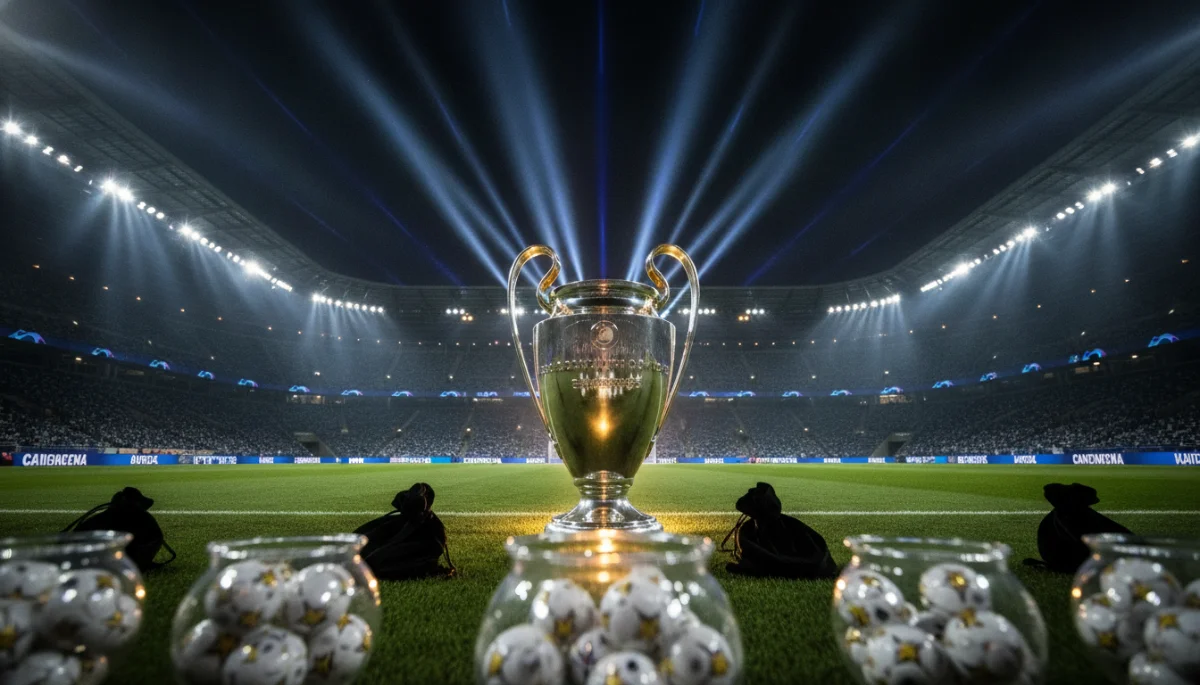
The Champions League league phase draw arrives on Thursday, and it will set the tone for months of elite football. With 36 clubs waiting to learn their eight opponents, the event will shape travel, tactics, and momentum long before the first ball is kicked.
Paris Saint-Germain enter as the team every contender wants to avoid after their latest title run, but the real drama is broader than one champion. The new format has turned the draw into a strategic puzzle, where every club faces a different road through the competition.
When the spotlight turns on
The draw is scheduled for Thursday, August 27, at 5 p.m. BST, and it is one of the most anticipated dates on the European calendar. At that point, clubs will stop guessing and start planning for the exact shape of their league phase campaign.
For supporters, the appeal is immediate. A strong draw can create belief, while a brutal sequence of opponents can test squad depth before autumn is even underway.
Why this format feels so different
The modern Champions League no longer uses the old four-team group setup. Instead, each side receives eight fixtures against a spread of opponents from the four seeding pots, creating a far less predictable path to the knockout rounds.
That change matters because no club shares an identical schedule. Managers cannot compare paths in the same simple way they once did, and fans are left to weigh every possible pairing for travel demands, style matchups, and the size of the challenge ahead.
The only major restriction is that teams cannot be paired with another club from the same country. Beyond that, the draw can produce a wide range of outcomes, from marquee collisions between European giants to demanding away trips against unfamiliar opposition.
The teams waiting in the draw
The first pot is filled with heavyweights such as Paris Saint-Germain, Bayern Munich, Real Madrid, Liverpool, Inter Milan, Manchester City, Arsenal, Barcelona, and Atletico Madrid. Those are the names that can make any draw feel intimidating before a single opponent is confirmed.
Pot 2 offers more high-level resistance, with clubs including Borussia Dortmund, Roma, Sporting, Aston Villa, Porto, Manchester United, Club Brugge, Real Betis, and PSV Eindhoven ready to complicate the route for any top seed.
Pot 3 brings its own danger through teams like Feyenoord, Lille, Bodo/Glimt, Napoli, RB Leipzig, Villarreal, Shakhtar Donetsk, and Galatasaray, along with the winner of the Fenerbahce versus Lyon tie.
Pot 4 may look less glamorous at first glance, but it still contains plenty of uncertainty. That group includes the winner of Dinamo Zagreb versus Viking, the winner of Slovan Bratislava versus Celje, Slavia Prague, VfB Stuttgart, LASK, the winner of Levski Sofia versus AEK Athens, Como, Lens, and Sabah.
What the draw could decide
This is not just about names on paper. The order and difficulty of opponents can influence how a team manages rest, rotation, and momentum across the league phase.
A favorable run can help a squad build confidence quickly, while a harsh sequence may force managers to prioritize survival and consistency over style. In a competition where every point matters, the draw itself can become a hidden turning point.
By Thursday evening, each club will have a complete map of the months ahead. Some will celebrate a clear path. Others will immediately start bracing for a demanding European marathon.

Leave a Reply